- Secures $552m for basic education, expands technical colleges
- Stabilises academic calendar in tertiary institutions
- Returns over 1 million out-of-school children to classrooms
President Bola Tinubu’s reforms in the education sector since he assumed office has expanded access to learning, improved teachers’ welfare, and stabilised academic calendar across higher institutions in the country.
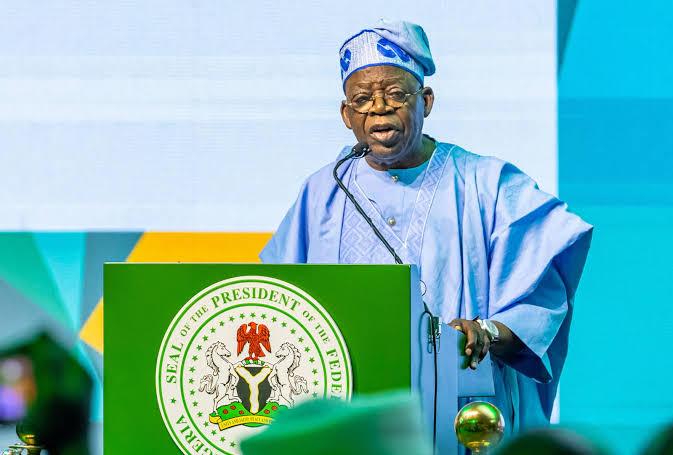
According to the Federal Ministry of Education through its Nigerian Education Sector Renewal Initiative (NESRI) 2026 report, the government’s interventions cover basic and secondary education, technical and vocational training, and tertiary education.
The reforms focus on six priority areas: technical and vocational education, science and medical sciences, out-of-school children, girl-child education, digitalisation and education quality assurance.
Increased funding for basic education
According to the NESRI report, the Federal Government allocated a record ₦3.52 trillion to education in the 2026 budget and secured $552 million for the HOPE-EDU programme, which targets 29 million children, over 500,000 teachers and 65,000 public schools.
The report said the BESDA programme has returned over one million out-of-school children to learning, trained 1,400 Tsangaya teachers and established 200 bilingual centres across 17 northern states.
It added that the AGILE programme has reached 7.19 million girls, with 3.7 million enrolled in secondary schools, while over 10,000 schools have benefited from improved facilities.
Curriculum reform and teacher development
The NESRI index indicated that the administration has introduced a revised national curriculum that reintroduces Nigerian History and strengthens Civic and Heritage Studies. For instance, the National Learning Assessment has been restored to monitor pupils’ performance and identify learning gaps.
Under EduRevamp, 53,553 teachers have registered, while 51,794 joined the first cohort of the Accelerated Teacher Professionalisation Pathway (ATPP), a six-month programme offering professional qualifications, certification and licensing.
Backed by ₦2 billion, the programme targets 250,000 teachers by 2027. Also, the Inspire Live initiative provides online lessons from Primary One to Senior Secondary School Three, supported by certified teachers and AI-assisted learning.
TVET programme records over 156,000 beneficiaries
Under the President Tinubu’s administration, the TVET scheme has attracted over 2.8 million applications, with 156,446 verified trainees receiving free training, monthly stipends and start-up support.
More than ₦65.7 billion have already been disbursed to trainees, while another sum of ₦30.2 billion has gone to training centres. The government has also rehabilitated 38 technical colleges and introduced free technical education covering tuition, boarding, textbooks, and uniforms.
NELFUND disburses ₦372.62bn
NELFUND, a flagship programme of the Tinubu administration in the education sector, has processed 1,659,853 student loan applications and disbursed ₦372.62 billion, comprising ₦192.89 billion for tuition and ₦179.73 billion for upkeep allowances across 319 tertiary institutions.
The administration has resolved the age-long dispute between the academic staff union of universities (ASUU) and implemented the agreement that provided for 40% increase in academic staff remuneration and improved welfare benefits.
Additionally, the Tertiary Institutions Staff Support Fund has disbursed ₦28 billion to 15,000 workers across 153 public institutions, offering eligible staff loans of up to ₦10 million for housing, healthcare, transportation and education.
Expansion of medical and STEMM education
Under the leadership of President Tinubu, the Federal Government is investing ₦110 billion in the rehabilitation of 18 federal medical schools across the six geopolitical zones. Nursing enrolment rose from 81,480 in 2023 to 114,300 in 2025, while 20 STEM-focused tertiary institutions have been approved and 12 engineering and technology faculties are targeted for rehabilitation.
Research, innovation and entrepreneurship
Equally, the Federal Government has provided ₦365 million annually for research and innovation through the National Laureate Prize, while the Student Venture Capital Grant has disbursed over ₦2.5 billion to 45 student entrepreneurs. Each beneficiary can access up to ₦50 million in equity-free funding.
Entrepreneurship certification is ongoing in 14 federal universities, while the Diaspora BRIDGE initiative has registered 1,141 Nigerian experts abroad, reaching 16,675 students across 107 tertiary institutions.
Speaking on the achievements recorded so far in the sector, Minister of Education, Dr. Tunji Alausa, noted that the success of President Tinubu-led education reforms would be measured by their impact on students, teachers and institutions rather than the amount of money allocated or the number of programmes introduced.
“Our measure of success is not merely the amount of money allocated to education or the number of programmes introduced. It is the difference these interventions make in the lives of our children, students, teachers and institutions,” he said.
Dele Alake
Spokesperson
APC Presidential Campaign Council
November 4, 2026