By Adeleke Babatunde
Sometimes, it is not just about the game. It is about having somewhere to go when the world becomes too demanding.
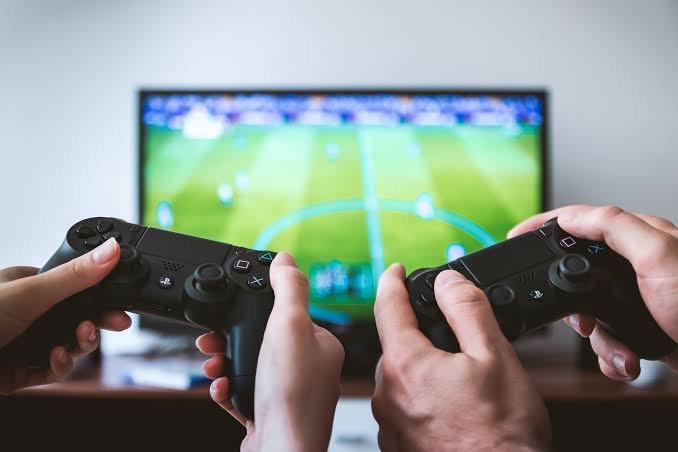
Yesterday evening, while taking a walk back home, I caught a glimpse of something through the lit window of a house. A man, probably in his mid-thirties, was settling into what looked like a rather comfortable evening. His ergonomic chair was positioned in front of a giant television. The satisfaction on his face was unmistakable as he swung the chair around to face the screen. The PlayStation icon was already visible.
It was only a brief moment. I did not get to see which game he was about to play, but considering the significance of the day, I would not be surprised if it was GTA VI.
There was something rather beautiful about that little scene. Here was a grown man, presumably with the usual responsibilities that come with adulthood, looking forward to a few hours with his console. No meeting to attend, no bills to explain, no expectations to satisfy. Just him, his chair, his television and whatever world he was about to enter.
It got me thinking again: what is it with grown men and video games?
The question is particularly interesting because GTA VI arrived yesterday, November 19, 2026, after thirteen years of waiting since GTA V. The anticipation has been extraordinary. For millions of people, this is not simply the release of another video game. It is the return of an experience that has occupied a significant part of their lives. And, rather conveniently, November 19 is also International Men’s Day.
Perhaps there is a connection worth exploring.
We have become accustomed to treating video games as something boys should eventually outgrow. A boy plays FIFA, Grand Theft Auto, Call of Duty or Mortal Kombat, and somewhere along the line, society expects him to put the controller down and become a serious adult. He is expected to find more respectable ways to spend his free time. He should be building a career, making money, raising a family and attending to the many responsibilities that announce themselves as adulthood arrives.
But what if the man does not want to give it up? What if, after a long day of work, he still wants to sit in front of his television and play for a couple of hours?
Why do we find that so difficult to understand?
Sometimes, a man just wants somewhere to be left alone.
There is an aspect of gaming that I think deserves more attention: the solitude it offers.
For many men, life is lived under a constant awareness of expectation. There are standards to meet, roles to fulfil and responsibilities that rarely take a day off. Men are expected to be strong, financially responsible, emotionally composed, dependable and capable of finding solutions. They are often judged by how well they perform these roles. Even when they are struggling, there is an expectation that they should find a way to keep going.
This does not mean women do not experience similar pressures. They do, often in different and equally demanding ways. But there is something particular about the way society measures masculinity and the pressure many men feel to appear capable, successful and in control.
In everyday life, a man can feel that he is constantly being evaluated. His income, career progression, appearance, relationship status, decisions and even his ability to provide can become subjects of public or private assessment. Sometimes, he is not looking for advice or another reminder of what he should be doing better. He just wants a break from being measured.
Gaming can offer that reprieve.
Inside a game, he is not necessarily the man who has not been promoted, the husband worried about household expenses, the father trying to provide, the employee dealing with an unreasonable manager or the young man still figuring out his place in the world. He is simply a player.
He can enter a world where the rules are different, where he can make decisions without every mistake becoming a reflection of his character. He can attempt a mission, fail, start again and try another approach. Nobody needs to ask him why he has not figured his life out. Nobody is measuring his salary, comparing his achievements or questioning his masculinity.
For a while, he can exist without the weight of those expectations.
There is a kind of freedom in that. It is not necessarily an escape from responsibility. It can simply be a temporary escape from the pressure of always having to be responsible.
The world inside the screen can feel easier to navigate.
One of the interesting things about video games is that they offer a sense of agency. In a world where so much can be beyond an individual’s control, games create environments in which decisions have visible consequences.
You can choose a route, solve a problem, complete a mission, build something, win a competition or start again after a failure. There is usually a clear objective, a set of rules and some indication of progress.
Real life is rarely that straightforward.
You can work hard and still not get the job. You can do everything right and still experience disappointment. You can make plans and watch circumstances change. Sometimes, you can spend years trying to achieve something without knowing how close you are.
In a video game, however, progress is often easier to see. The mission is completed. The level changes. The score improves. The character becomes stronger. There is a reward for persistence, and even when you fail, you can usually try again.
For someone whose everyday life feels uncertain, that sense of control can be satisfying.
This is one reason the appeal of gaming should not be reduced to childishness. There is a psychological experience taking place, and for some people, it provides a welcome change from the unpredictability of ordinary life.
There are health benefits, too.
The conversation about video games often focuses almost exclusively on their dangers. We hear about addiction, wasted time, poor posture, inactivity and the possibility of social isolation. These are legitimate concerns, but they are not the entire story.
Research has also explored the potential cognitive and mental health benefits of gaming.
Some studies suggest that certain video games can exercise skills involving attention, memory, spatial awareness, problem-solving and decision-making. A 2026 systematic review and meta-analysis covering 133 studies found small but statistically significant associations between video game play and several cognitive abilities, including memory, spatial ability, visual attention and cognitive control.
There is also evidence that gaming can help some people manage stress and anxiety. A systematic review of 28 studies found that commercial video games could contribute to reducing stress and anxiety across different age groups. The benefits varied according to the type of game and the individual playing it.
Think about what happens when someone becomes absorbed in a game. Their attention shifts away from the immediate worries of the day. They concentrate on a task, respond to changing situations, make decisions and engage with an activity they enjoy. For some people, that period of absorption can be relaxing.
Gaming can also provide social benefits. Multiplayer games allow people to communicate, cooperate, compete and maintain friendships. Two friends who live in different cities or countries may not see each other regularly, but they can still meet online, play together and talk. Sometimes, the game is simply the reason they show up for each other.
For men who find it difficult to initiate conversations about their feelings or personal struggles, these shared activities can create opportunities for connection without the pressure of a formal conversation. They may not sit down to discuss how life is treating them, but they can spend two hours playing together, laughing, arguing over a missed goal and catching up.
That companionship matters.
Of course, gaming is not a medical treatment for depression, anxiety or any other health condition. Its benefits are not guaranteed, and they depend on the individual, the game and the way it is played. But it is worth acknowledging that an activity does not become worthless simply because it is recreational.
We recognise the value of watching a film, listening to music, reading a novel or playing football. Gaming deserves a similarly thoughtful conversation.
Perhaps we should also talk about nostalgia.
For many men now in their thirties and forties, video games are connected to childhood memories. They remember the PlayStation 1, PlayStation 2, Sega consoles, FIFA, Winning Eleven, Mortal Kombat, Tekken and the early versions of Grand Theft Auto.
They remember visiting a friend’s house to play, arguing over who would get the next turn, borrowing game discs and trying to unlock characters or complete difficult missions.
Those memories do not disappear simply because someone gets older.
The boy who once spent Saturday afternoons playing football games has grown into a man who might spend a Friday evening playing EA Sports FC. The teenager who waited for the next GTA release has become an adult with enough money to buy the console, the television and the game he once could only dream of owning.
In a sense, gaming has grown up with its audience.
The industry has also changed considerably. Video games have become sophisticated entertainment experiences, with impressive graphics, elaborate storytelling, complex characters, music, expansive worlds and cinematic production. Some games offer experiences that are as emotionally engaging as films and television series.
GTA VI is a particularly interesting example. Its arrival is not just about the opportunity to drive around a virtual city or complete missions. It represents the return of a world that players have been discussing, anticipating and imagining for years.
For someone who grew up with the franchise, there is an emotional connection that may be difficult to explain to someone who has never played it.
Not every quiet evening needs to be productive.
I think one of the problems with how we discuss adulthood is that we sometimes attach too much importance to productivity.
Everything must have a purpose. Every spare hour should contribute to a goal. Every hobby should be useful, profitable or capable of being converted into some form of personal development.
But people need leisure. They need activities that are enjoyable simply because they are enjoyable.
A man can spend eight hours at work, commute home, attend to his family, respond to messages, sort out domestic responsibilities and still want to spend an hour playing a video game. That does not automatically mean he is avoiding adulthood.
Sometimes, he is just enjoying his evening.
The man I saw through that window yesterday may have had a demanding day. He may have been dealing with things I knew nothing about. He may have had a perfectly ordinary life, or he may have been carrying concerns that nobody around him knew about. I cannot say.
But I saw the satisfaction on his face, and for that brief moment, he looked like someone who was genuinely happy to be where he was.
I found that rather refreshing.
There is something worth considering about a man finding joy in a harmless activity within the privacy of his home. We should not be so quick to interpret every expression of leisure as irresponsibility.
Of course, there must be a balance.
It would be dishonest to pretend that gaming has no downsides. It can become excessive. It can interfere with sleep, physical activity, relationships, work and other responsibilities. Some online environments can expose players to harassment, hostility and unhealthy competition. Spending too much time sitting in front of a screen also has physical consequences.
The World Health Organisation recognises gaming disorder in its International Classification of Diseases. However, the diagnosis is not based simply on enjoying video games or spending many hours playing. It involves impaired control, gaming taking priority over other important activities, and continuing to play despite serious negative consequences. The pattern must cause significant impairment in important areas of life.
That distinction matters.
A man who plays video games after work is not automatically addicted. A man who buys a new console is not necessarily irresponsible. A man who looks forward to a new release is not failing at adulthood.
The important question is whether gaming has found a healthy place within his life or has begun to take over the life he is supposed to be enjoying.
He should still exercise, sleep properly, maintain his relationships, attend to his finances and fulfil his responsibilities. His family should not have to compete with a video game for his attention every evening. His work should not suffer because he cannot put down the controller.
But once those responsibilities are being met, perhaps we can allow him his little corner of happiness.
So, what is it with grown men and video games?
Perhaps it is nostalgia. Perhaps it is the thrill of competition, the satisfaction of completing a difficult mission or the pleasure of exploring a world that exists entirely on the other side of a screen.
Perhaps it is the friendships formed over online matches, the mental stimulation, the stress relief or the simple joy of doing something without having to explain its usefulness.
And perhaps, for some men, it is something even more personal: a place where they can retreat from the expectations of the world, where they do not have to prove how successful, strong, capable or dependable they are. A place where they can be imperfect, start again and enjoy themselves without being judged.
Maybe that is what I saw yesterday evening through that lit window. Not just a man preparing to play a video game, but a man looking forward to a few hours in which he could simply be himself.
International Men’s Day came with conversations about men’s wellbeing, the pressures they face and the importance of creating healthier environments for them. Perhaps one small part of that conversation is learning to recognise the things that bring men joy, even when we do not personally understand the appeal.
So, let the man play his game. Let him enjoy GTA VI after thirteen years of waiting. Let him swing his ergonomic chair towards that giant television and settle in for the evening.
Just remind him that there is a real world outside the screen, and unfortunately, the bills in that world do not come with cheat codes.