There is a tired, decades-old joke in Nigerian economic circles: we export crude oil to import refined petrol, and we export raw cocoa only to empty our pockets buying Swiss and French chocolates. For a long time, the trade narrative between France and Nigeria was trapped in this predictable, asymmetric loop.
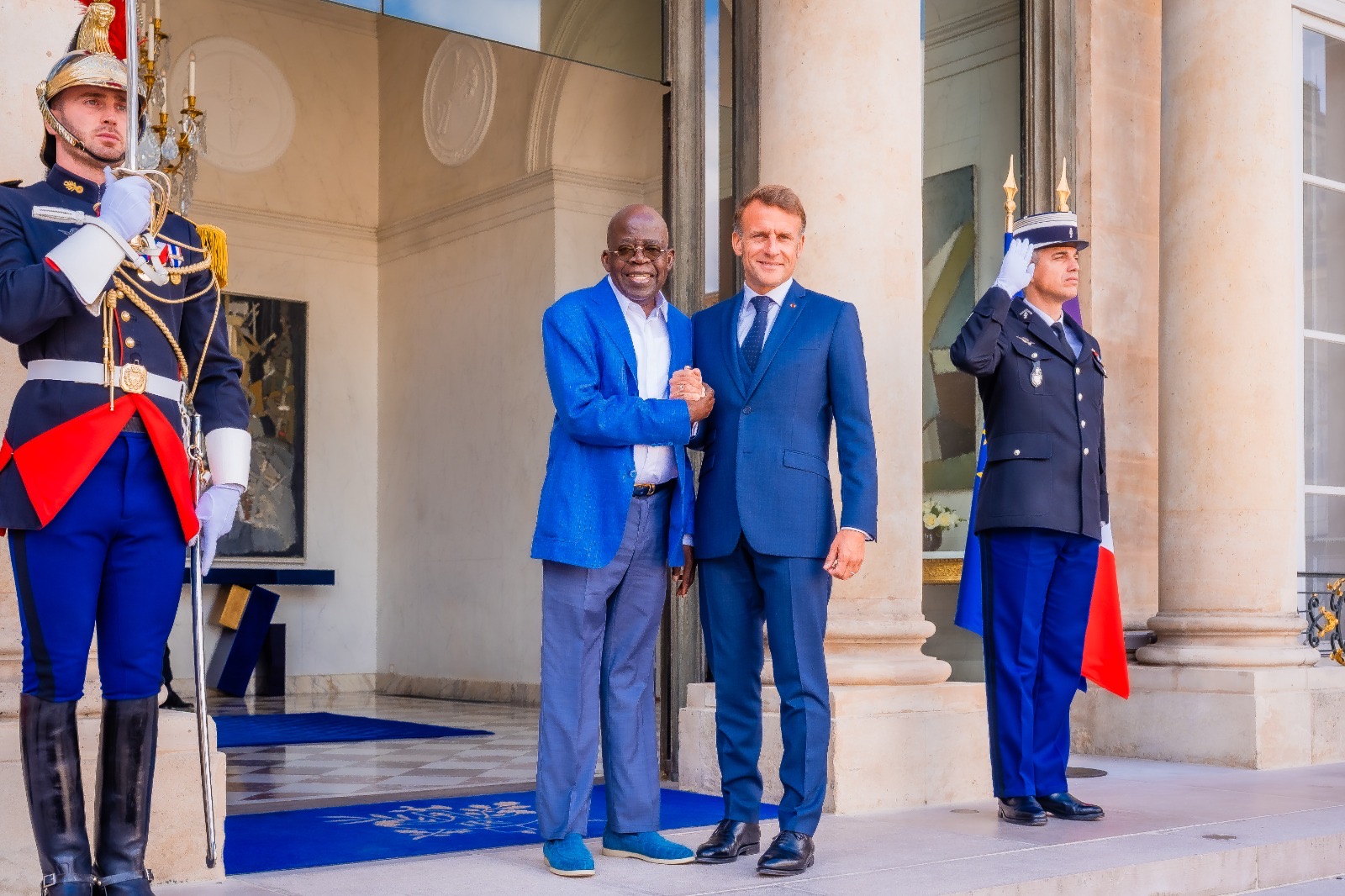
But last month’s France-Nigeria Agribusiness Dialogue in Lagos proved that the music has finally stopped. Driven by the harsh macroeconomic realities of a devalued Naira, and a food inflation crisis that is testing the resilience of the average Nigerian, this bilateral relationship is undergoing a forced, yet welcome, evolution.
The blueprint for this new era begins exactly where one of Nigeria’s greatest, yet most neglected, resources lies: the soil. The launch of the France-Nigeria Agribusiness Club is not just another talk shop. Backed by France’s global Food and Agriculture Resilience Mission (FARM) initiative – to which the French and African public and private sectors have already pledged substantial financing – the mandate is refreshingly pragmatic.
The strategy has shifted from transactional trading to capacity building, mechanization, and technology transfer. Paris seems to have finally read the room: you can no longer simply look at a 220-million-strong market as a dumping ground for finished dairy or cereals. Instead, French capital and machinery are now positioning themselves as the engine for Nigeria’s own food sovereignty. This intervention aligns perfectly with the Tinubu administration’s push to revamp domestic output and stabilize everyday food prices, making this private-sector alliance an imperative for our national economic recovery.
Nothing illustrates this departure from the old ways better than the appointment of Olawale Rotimi Opeyemi, Chief Executive Officer of JR Farms, as the pioneer President of the Club. JR Farms is the poster child for the modern Nigerian hustle, focusing heavily on agro-processing across the continent and launching digital trade solutions like the Food for Nations platform. By placing a young Nigerian entrepreneur who champions value addition at the helm, the message from both Abuja and Paris is clear: the days of paternalistic trade are dead. Youth-led co-creation is the new currency.
Yet, anyone who understands the Nigerian market knows that agriculture does not exist in a vacuum. The bottlenecks dissected at the Lagos dialogue revealed that our farming sector is starved of more than just fertilizers; it desperately needs data, cold chain logistics, and fintech solutions.
This is where the agribusiness conversation organically spills over into a broader industrial masterplan. Moving perishable goods from the markets of Kano to the ports of Lagos demands robust cold chain infrastructure, an arena where French logistics giants are now aggressively expanding. Simultaneously, bridging our agricultural data deficit is opening lucrative doors for partnerships between French tech investors and homegrown Nigerian agri-tech startups.
This integrated, cross-sector approach is essentially a microcosm of the grand strategy driven by the broader France-Nigeria Business Council. Long championed by the formidable, unapologetic ambition of business and industrial titans like Aliko Dangote, Abdulsamad Rabiu, and Tony Elumelu, the Council has spent the last few years laying a massive bilateral foundation. Dangote has notably flipped the script by turning France into a major customer for his mega-refinery’s aviation fuel. Elumelu, on his part, has steadily pushed his United Bank for Africa toward full banking operations in Paris, positioning intercontinental trade flows to be driven by African capital.
This top-tier momentum was powerfully showcased at the landmark Africa Forward Summit in Nairobi earlier this year. It was at this specific gathering that the Council’s tenth meeting proved to the world that the geopolitical and geoeconomic tectonic plates are shifting. As French influence faces heavy headwinds in its traditional Francophone comfort zones, Paris is making a calculated, execution-driven pivot to forge alliances with Anglophone giants like Nigeria and Kenya.
Building on the heavy lifting done by these veteran business leaders, younger players across dynamic economic sectors are boldly stepping up. The pipeline between Paris’s tech hubs and the Lagos startup ecosystem is maturing, with French venture capital increasingly chasing Nigerian innovators.
The creative economy is seeing similar momentum, seeking to turn co-productions and animation into bankable, non-oil export avenues. The acquisition of Multichoice by French group Canal+ is yet another sign of growing convergence between the world’s Francophone and Anglophone spheres, with Africa as a vital frontier.
Meanwhile, as we navigate our energy transition, French majors are diversifying their local portfolios beyond deep-water oil blocks into liquefied natural gas and clean and sustainable power generation for local industries.
Last month’s Agribusiness Dialogue was never solely about farming; it was a declaration of intent. The success of emerging champions like JR Farms, standing tall on the commercial bridge built by figures like Dangote and Elumelu, is the ultimate proof of concept.
The lazy economics of exchanging raw materials for finished goods has officially expired. The future of France-Nigeria relations is about building the factories, deploying the technology, and funding the infrastructure right here on Nigerian soil, working with global partners who are ready to do business the Nigerian way.