
By Babajide Fadoju
In 2026, the Nigerian Navy will officially turn 70, having come into existence on June 1, 1956, as the Nigerian Navy Defence Force (NNDF). The middle child of Nigeria’s Armed Forces—younger than the Army but older than the Air Force—the Service is approaching a platinum jubilee milestone.
For the Navy, and for the nation as a whole, this anniversary is a moment to celebrate and honour an enduring legacy of courageous service. It is also an opportunity to reaffirm the Navy’s unwavering commitment to safeguarding Nigeria’s maritime domain and protecting the country’s vital economic lifelines at sea.
Platinum, as a metal, symbolises strength and durability. It is resistant to wear and corrosion, widely used across industries, and is, in fact, the most ductile of all pure metals—able to be stretched into thin wire without breaking.
It is a fitting metaphor for the Nigerian Navy: resilient under pressure, adaptable in form, and enduring in purpose.
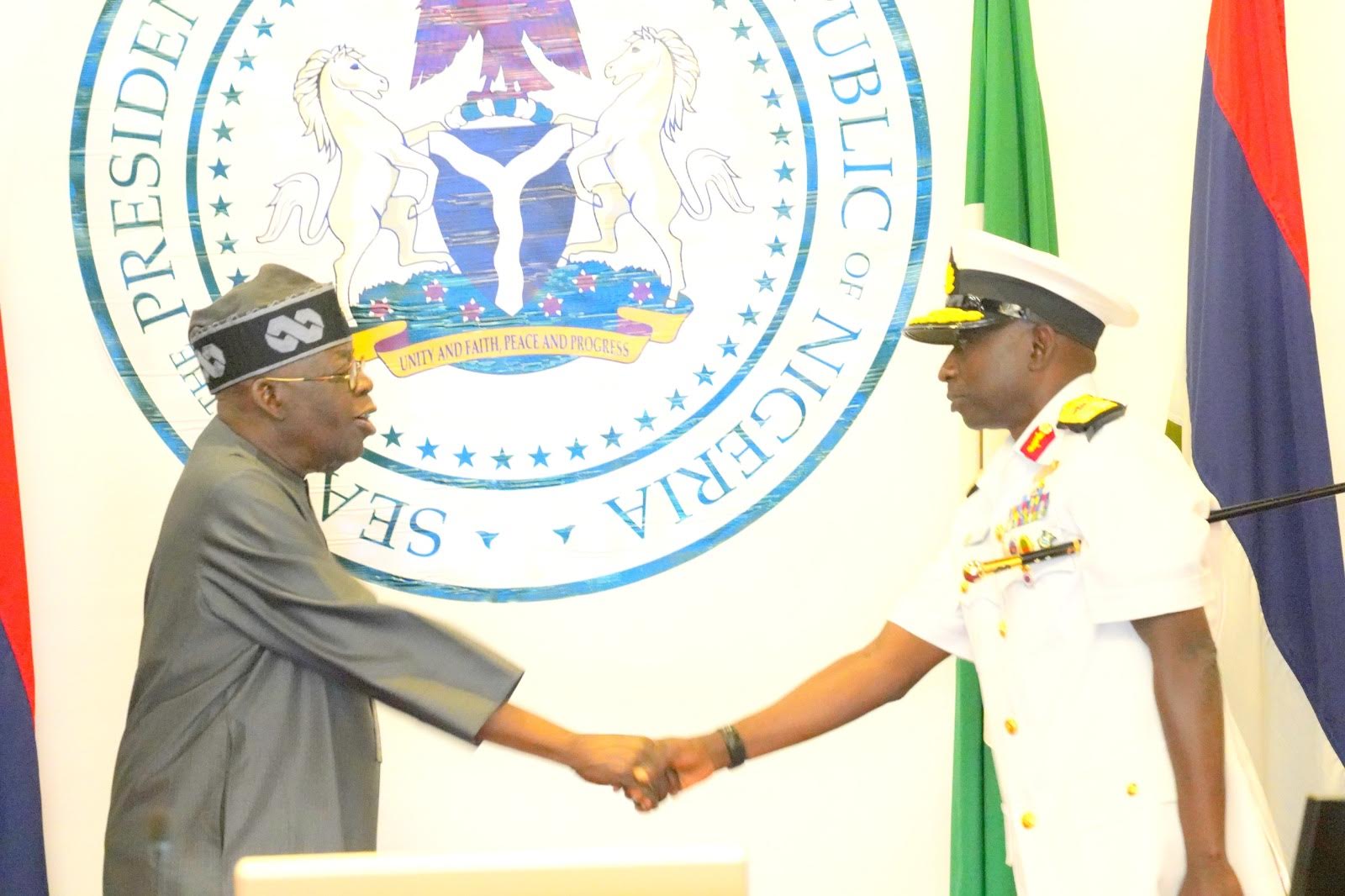
The man who will lead the Service through its 70th anniversary and into the next phase of its journey is Vice Admiral Idi Abbas, the 56-year-old 25th Chief of the Naval Staff, who assumed command on the penultimate day of October 2025. Since taking office, the highly decorated Above Water Warfare specialist has signalled his determination to preside over a defining era for the Navy.
For his command, 2026 will be a pivotal year—an opportunity to present to the world a Nigerian Navy that is at its most capable, most motivated, and most formidable in its history, and to demonstrate fidelity to his inaugural pledge to “uphold the proud traditions of excellence and service that define our Navy,” while leading from the front, listening attentively, and keeping personnel welfare at the heart of command.
As the new year gets underway, preparations are gathering momentum, under Abbas’ leadership, for the anniversary celebrations, which will take place within the symbolic window between May 29 and June 12—two of the most significant dates in Nigeria’s democratic calendar. That symbolism should not be overlooked. The Navy, like the rest of the Armed Forces, occupies a special place in Nigeria’s democracy: protecting national sovereignty, preserving territorial integrity, and projecting Nigerian power and influence beyond its shores.
Planned events for the platinum jubilee include an International Maritime Conference and Exhibition, as well as an International Fleet Review (IFR). Of all the Services, the Nigerian Navy is perhaps the most intrinsically international in outlook, given the multinational nature of the maritime environment in which it operates. It is therefore no surprise that navies from around the world will converge on Nigeria in the first week of June to participate in the celebrations, underscoring the Service’s growing global partnerships and standing.
It is not an exaggeration to say that the modest force that began in 1956 with a handful of patrol, training, and survey vessels would barely recognise today’s Nigerian Navy. What now exists is one of Africa’s most formidable and respected maritime forces, equipped with modern platforms, improved infrastructure, and a more professionalised corps of officers and ratings.
Even compared to the Navy that marked its 60th anniversary in 2016, today’s Service represents a significant leap forward. The past decade has seen sustained investment, doctrinal refinement, and operational improvement. The results are evident. This is the Nigerian Navy that has kept Nigeria off the global list of piracy-prone nations for four consecutive years, maintaining a clean slate since that historic achievement in 2022—no small feat in one of the world’s most complex maritime regions.
This is also the Nigerian Navy that, in 2025, concluded an agreement with the African Union to provide strategic sea lift services in support of AU humanitarian operations across the continent. Central to this capability is NNS KADA, one of the most modern and capable warships in Africa today.
Indeed, it is KADA’s advanced capabilities that positioned the Navy to credibly offer such support to the African Union.
The Navy’s elite Special Boat Service (SBS) has further strengthened its reputation as a top-tier special forces unit, and is now complemented by a newly established Special Operations Command (SOC), strategically located along the banks of the River Benue in Makurdi, Benue State.
Beyond defence, the Nigerian Navy has increasingly asserted itself in humanitarian assistance and community impact. Through dozens of infrastructure projects nationwide, as well as high-risk rescue and evacuation operations, the Service has saved countless lives that would otherwise have been lost to maritime accidents and flooding.
In August 2024, all 59 crew members of the dredging vessel MV Ambika 4 were rescued during a ten-hour naval operation—an operation that tragically claimed the life of Lieutenant Commander Gideon Yashim Gwaza, who led the mission and paid the ultimate price in service to others. More recently, on December 22, 2025, Nigerian Navy personnel rescued 20 crew members from the burning MV Chimba Express along the Calabar waterways.
Nigeria was also recently in the news for the military intervention that helped preserve democracy in the Republic of Benin following an attempted coup on December 7. Less widely known, however, is the Nigerian Navy’s quiet but crucial role in strengthening Benin’s maritime security. Just two weeks before the attempted coup, the Naval Dockyard Limited formally handed over a fully refitted Benin Navy ship, BNS Matelot Brice Kpomasse, as part of an agreement to repair and upgrade six Beninese naval vessels signed in 2024.
The Nigerian Navy has also become a valued partner in the global effort to fully map the world’s ocean floor. In May 2023, it entered a historic partnership with the Nippon Foundation–GEBCO Seabed 2030 Project, reflecting the significant advances the Service has made in oceanographic research, hydrographic surveying, and technical expertise. These advances have delivered tangible local benefits, with the National Hydrographic Agency—formerly the Nigerian Navy Hydrographic Office—producing updated and more accurate charts of Nigeria’s waterways.
These achievements outlined above represent only a fraction of what defines Nigeria’s platinum Naval Force. Like every other Service, and the entirety of Nigeria’s security architecture, the Nigerian Navy has been able to count on the unwavering support and commitment of the Commander-in-Chief, His Excellency, President Bola Ahmed Tinubu. With this level of support, there is no doubt that the best is yet ahead; that fair winds and following seas are already assembling to usher the Nigerian Navy into an even more rewarding next chapter.
Babajide Fadoju writes from Ondo State