Jaafar Jackson is electrifying, and the early years shimmer with promise. But a story this immense cannot be served by a portrait this timid. A confession from a lifelong believer.
By Adeleke Babatunde | May 8, 2026
DIRECTED BY Antoine Fuqua WRITTEN BY John Logan
STARRING Jaafar Jackson, Colman Domingo, Nia Long RUNTIME 130 minutes, PG-13
DISTRIBUTOR Lionsgate RELEASED April 24, 2026
RATING ★★★☆☆ 3 out of 5
Let me be honest with you, and full disclosure demands I begin there. I was, at one point in my life, unreasonably obsessed with Michael Jackson. I have read nine books written about him. Nine. Everything from exhaustive biographies to more theoretical dissections of his iconography, his cultural machinery, his tragedy. I tell you this not to establish credentials, but to confess a bias: I walked into Antoine Fuqua’s Michael not as a neutral critic. I walked in as a believer, one who has spent years trying to understand one of the most complicated human beings the twentieth century produced. That is why what follows is less a review than a lamentation.
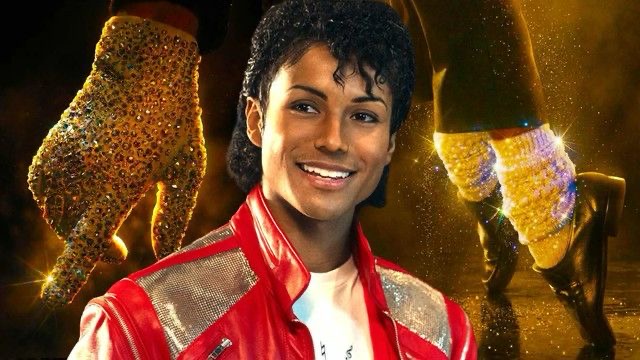
The film is, in places, genuinely good. Let us start there. Jaafar Jackson, Michael’s nephew, delivers a performance so unsettling in its physical precision that the camera seems uncertain how to behave around him. He does not imitate his uncle so much as haunt the screen with him. The early childhood sequences, set against the cramped fluorescent world of Gary, Indiana and the brutal rehearsal rooms that Joe Jackson turned into training grounds, carry a real ache. Colman Domingo is ferocious as Joe, wounded, furious, morally compromised. These early scenes, where a child prodigy is simultaneously discovered and deformed, represent the film at its most honest and most affecting.
Fuqua clearly understands spectacle. The performance sequences, from “I Want You Back” through the Motown years to glimpses of the Off the Wall ascension, are visually electric. He was once a music video director, and it shows: when the music plays, the film becomes briefly and brilliantly alive. But cinema is not a playlist, and a life as seismic as Michael Jackson’s cannot be adequately rendered in highlight reel.
The film gives us the surface of a legend when what we needed was the weather system underneath, the storms, the barometric pressure, the strange silences before everything broke.
Here is where I must speak plainly: too many things have been left in the cracks. The narrative rushes through decades with the brisk confidence of a man who is not sure he is allowed to slow down. We sprint from Gary to Motown to superstardom without sufficient pause to feel the psychic weight of any of it. The particular loneliness of a child who has never been allowed to be a child. The brothers, Jackie, Tito, Jermaine, Marlon, exist here as background furniture. They are not characters. They are scenery.
And this is the film’s most fundamental structural failure, one I keep returning to with real frustration. Michael would have been a far richer, more resonant, more dramatically satisfying film had it been conceived as a story about the Jackson 5, a proper ensemble chronicle with each brother carrying his own arc within a fuller, more textured narrative. Imagine it: five young Black men from Indiana, shaped by the same household, the same father, the same impossible expectations, and yet each diverged in his own direction once the lights came on. That is a story with natural tension, with contrast, with humanity. Michael’s singular greatness becomes even more comprehensible when you can see it measured against his brothers, rather than conjured in isolation.
Instead, Michael insists on treating its subject as a man who essentially existed alone. No real friendships, no collaborators rendered with any depth, no rivals given their due. The one brief exception is a scene in which a young Michael, floating in a swimming pool, worries that if he does not keep his mind clear enough to receive musical inspiration from God, God might give it to Prince instead. It is so perfectly calibrated that it makes you mourn everything the rest of the film refuses to be.
For Michael alone, the story is still too shallow. A vast myth reduced to a museum placard. You learn the dates. You never feel the weather.
The film’s decision to cut off its timeline in 1988, ending with the Bad tour and a kind of self-congratulatory musical curtain call, means that we are watching, at most, the first third of the only story that matters. The complexity, the contradictions, the spectacular unraveling: all of it deferred. One suspects the legal machinery of the Jackson estate had a considerable hand in determining what made the final cut. There are seams visible in the narrative fabric where scenes have been excised, tones abruptly changed, and consequences quietly buried.
And yet, and I say this with the cautious optimism of someone who has not given up, the film can be saved. Not revised, but extended. A sequel, or better yet a series of sequels, could redeem the project’s ambitions. What Fuqua has built here is, despite its timidity, a functional foundation. Jaafar Jackson is a genuine discovery. The period is established. If the filmmakers have the courage and the freedom to press deeper into the 1990s and beyond, to let the story breathe and bruise, to finally allow Michael Jackson to be a flawed and searching human being rather than a carefully curated icon, there is still a great film to be made from this material.
As it stands, Michael is an expensive, often dazzling, frequently moving, and ultimately insufficient act of remembrance. It loves its subject too much and too narrowly to do him justice. The truest tribute to Michael Jackson would be a work as complicated, as contradictory, and as unwilling to settle for the easy answer as the man himself. We are not there yet.
THE VERDICT
Jaafar Jackson commands the screen and the early Gary years carry genuine emotional weight. But Michael remains a monument to what it chose not to say. A Jackson 5 ensemble framing would have given the story its proper scale. As a solo portrait, it is portrait-sized where it needed to be panoramic. Worth seeing. Not yet the film this legacy deserves. Sequels, if they come, could change everything.